
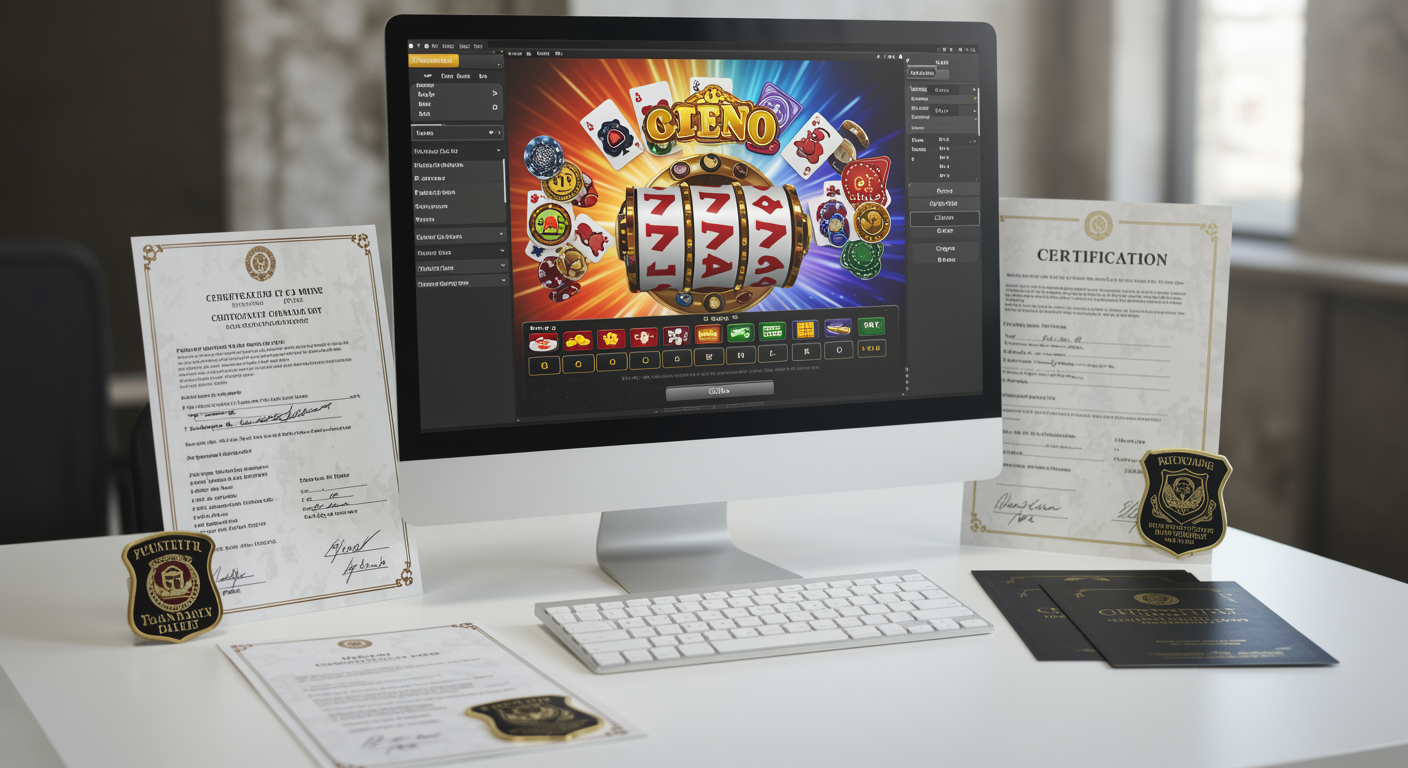
RNG certification represents the cornerstone of fair gaming in South Africa, ensuring that every spin, deal, and draw delivers genuinely random outcomes. With the country’s gambling industry valued at billions of rands, players need absolute confidence that their games aren’t rigged against them. RNG certification provides this assurance through independent verification of random number generation systems.
South African gambling regulations mandate strict compliance with certified RNG systems across all licensed operators. The National Gambling Board and provincial licensing authorities require operators to demonstrate their games use independently tested and certified random number generators. This regulatory framework protects players while maintaining the integrity of the gambling industry, making RNG certification verification an essential skill for every South African gambler.
What Is RNG Certification and Why Does It Matter?
Random Number Generation (RNG) certification validates that gambling software produces truly unpredictable outcomes, forming the foundation of fair gaming practices. In South Africa’s regulated gambling environment, RNG systems undergo rigorous testing by independent agencies to ensure mathematical randomness and compliance with international standards. These systems generate millions of numbers per second, determining everything from slot machine results to lottery draws.
The certification process involves comprehensive algorithmic analysis, statistical testing, and ongoing monitoring to prevent manipulation or predictable patterns. Certified RNG systems must demonstrate true randomness across extended testing periods, typically involving billions of game rounds or draws. This extensive validation ensures that no player, operator, or external party can predict or influence game outcomes.
- Mathematical verification of randomness algorithms and seed generation processes
- Statistical analysis proving uniform distribution across all possible outcomes
- Penetration testing to prevent external manipulation or hacking attempts
- Compliance verification with South African gambling legislation and international standards
- Ongoing monitoring systems to detect anomalies in real-time gaming operations
- Regular re-certification cycles ensuring continued compliance and security
- Documentation requirements providing transparent audit trails for regulatory review
Uncertified RNG systems pose significant risks to players, including biased outcomes, predictable patterns, and potential manipulation by unscrupulous operators. Without proper certification, players have no guarantee that games operate fairly, potentially leading to systematic losses and undermined confidence in gambling activities. The absence of certified RNG systems often indicates unlicensed or rogue operators who prioritize profits over fair play.
South African players should recognize that uncertified systems may appear random on the surface but could contain hidden biases favoring the house beyond acceptable mathematical advantages. These systems might produce clusters of wins and losses, making games appear fair in short sessions while systematically disadvantaging players over extended play periods.
How RNG Ensures Game Fairness
Certified RNG systems employ sophisticated mathematical algorithms that generate sequences of numbers with no discernible patterns or predictable relationships. These algorithms typically use multiple entropy sources, including atmospheric noise, hardware variations, and cryptographic functions, to create truly random seed values. The resulting number sequences undergo continuous evaluation to ensure they meet strict statistical standards for randomness.
The certification process verifies that RNG systems produce unbiased results across all possible game outcomes, ensuring equal probability for every combination or result. Independent testing agencies run millions of simulations to confirm that actual results match theoretical probabilities within acceptable statistical margins. This validation process guarantees that neither lucky streaks nor losing runs indicate system manipulation.
- Entropy harvesting from multiple unpredictable sources ensures seed unpredictability
- Cryptographic algorithms prevent reverse engineering or pattern prediction
- Statistical distribution testing confirms equal probability for all outcomes
- Temporal analysis verifies randomness across different time periods and gaming sessions
- Range testing ensures fair distribution across minimum and maximum possible values
- Correlation analysis prevents relationships between consecutive or related game results
Modern certified RNG systems incorporate additional security measures, including tamper detection, secure key management, and real-time monitoring capabilities. These features ensure that even if someone gains access to the gaming system, they cannot manipulate the RNG without triggering security alerts. Regular seed refreshing and algorithm updates maintain unpredictability even against sophisticated attack attempts.
The mathematical foundation of certified RNG systems relies on proven algorithms like the Mersenne Twister or cryptographically secure pseudo-random number generators (CSPRNGs). These algorithms have undergone extensive peer review and testing by the global cryptographic community, providing confidence in their randomness properties and resistance to prediction attacks.
Impact of RNG Certification on Player Trust
RNG certification serves as a transparency cornerstone in South Africa’s gambling industry, building player confidence through verifiable fairness guarantees. When players see certification badges from recognized agencies like eCOGRA or iTech Labs, they know independent experts have validated the game’s randomness and fairness. This transparency creates a foundation of trust essential for a healthy gambling market where players feel confident in their gaming choices.
The certification process requires operators to submit detailed technical documentation and undergo regular audits, creating accountability that extends beyond initial approval. South African regulators leverage these certifications to ensure operators maintain fair gaming standards throughout their operational lifetime. Players benefit from this regulatory oversight, knowing that certified games undergo continuous monitoring and must meet ongoing compliance requirements.
Certified RNG systems contribute to market stability by distinguishing legitimate operators from potentially fraudulent alternatives. This differentiation helps players make informed decisions while encouraging operators to invest in proper certification rather than attempting to cut corners with uncertified alternatives. The resulting market environment benefits everyone through improved standards and increased player confidence.
Key Certifying Agencies for RNG in SA
Several internationally recognized agencies provide RNG certification services for South African gambling operators, each bringing specialized expertise and rigorous testing methodologies. These agencies maintain laboratories equipped with sophisticated testing equipment and employ mathematicians, statisticians, and software engineers dedicated to evaluating RNG systems. Their certifications carry significant weight with both regulators and players due to their proven track records and stringent testing standards.
The most prominent agencies serving the South African market include eCOGRA, iTech Labs, GLI (Gaming Laboratories International), BMM Testlabs, and NMi Gaming. Each agency offers unique strengths in different areas of RNG testing, from traditional casino games to lottery systems and emerging gaming technologies. Understanding these agencies helps players recognize legitimate certifications and avoid operators using questionable or fabricated credentials.
| Agency | Region | Role | Certification Badge | Testing Frequency |
|---|---|---|---|---|
| eCOGRA | Global/UK-based | RNG certification, game fairness, responsible gambling | Safe & Fair seal | Monthly monitoring |
| iTech Labs | Australia/International | RNG testing, game mathematics, compliance | iTech Labs certified | Quarterly audits |
| GLI | USA/Worldwide | Gaming equipment testing, RNG certification | GLI approved | Annual recertification |
| BMM Testlabs | Australia/Global | Technical compliance, RNG analysis | BMM certified | Bi-annual testing |
| NMi Gaming | Netherlands/Europe | Gaming system certification, RNG validation | NMi approved | Continuous monitoring |
These agencies maintain strict accreditation requirements and must demonstrate technical competence to international standards organizations. Many hold ISO 17025 accreditation for testing and calibration laboratories, ensuring their testing methodologies meet global quality standards. This accreditation provides additional assurance that their certification processes are both rigorous and reliable.
South African operators typically choose certification agencies based on their target markets, regulatory requirements, and specific testing needs. Some agencies specialize in particular game types or technologies, while others offer comprehensive testing services across all gaming categories. Players should familiarize themselves with these agency badges and verification processes to confidently identify properly certified games.
How Certification Agencies Audit RNGs
The RNG audit process follows established international protocols designed to evaluate every aspect of random number generation systems. Certification agencies employ teams of specialists who examine source code, test mathematical algorithms, and verify implementation security. This comprehensive approach ensures that RNG systems meet both technical requirements and regulatory standards for fair gaming.
The audit process typically spans several weeks or months, depending on system complexity and the scope of testing required. Agencies must verify not only that the RNG produces random results but also that the entire gaming system properly implements these random numbers in game outcomes. This end-to-end validation ensures players receive truly fair gaming experiences.
- Initial documentation review examining RNG algorithms, implementation specifications, and security measures
- Source code analysis verifying proper algorithm implementation and identifying potential vulnerabilities or biases
- Statistical testing using standardized test suites like NIST SP 800-22 or Diehard tests
- Game simulation running millions of rounds to verify theoretical return-to-player percentages
- Security assessment testing tamper resistance and protection against manipulation attempts
- Integration testing ensuring RNG systems properly interface with game logic and payout systems
- Final certification report documenting all findings and issuing formal approval for commercial use
How to Verify RNG Certification on South African Platforms
Verifying RNG certification requires knowing where to look and what to look for on gambling websites and gaming platforms. Most legitimate operators prominently display certification badges on their homepage, typically in the footer area alongside other regulatory and licensing information. These badges should be clickable links that redirect to the certifying agency’s website for verification, providing players with direct access to certification details and validity confirmation.
Players should examine the “About Us,” “Fairness,” or “Certification” pages on gambling sites, where operators typically provide detailed information about their RNG certification status. Look for specific certificate numbers, testing dates, and clear statements about which games or systems have been certified. Legitimate operators are transparent about their certification status and willingly provide detailed information to build player confidence.
The licensing information section of gambling websites should include RNG certification details alongside other regulatory approvals. South African operators licensed by provincial gambling boards must demonstrate RNG certification compliance as part of their licensing requirements. Players can verify this information by checking the operator’s license details with the relevant provincial gambling authority.
Many certified operators provide direct links to their certification reports or summaries, allowing players to review testing results and certification scope. These documents typically include testing dates, certified game categories, and any conditions or limitations associated with the certification. Players should be suspicious of operators who cannot provide clear, verifiable certification information.
Mobile gaming applications should display certification information in their app stores listings or within the app’s settings or information sections. Legitimate gambling apps include certification badges and verification links just as prominently as their desktop counterparts. Players should avoid apps that lack clear certification information or provide vague claims about fairness without specific agency verification.
Examples of Certification Badges and Displays
Certification badges vary significantly in design and placement, but legitimate certifications share common characteristics that help players distinguish authentic credentials from fake alternatives. Genuine badges typically include the certifying agency’s official logo, certification dates, and specific identification numbers or codes. These badges should maintain consistent branding with the agency’s official materials and include security features that prevent unauthorized reproduction.
| Badge/Seal | Certifier | Where Found | Verification Link |
|---|---|---|---|
| Safe & Fair seal | eCOGRA | Website footer, game lobby | ecogra.org verification portal |
| Certified badge | iTech Labs | Homepage, about page | itechlabs.com certificate lookup |
| GLI approved logo | GLI | Certification page, footer | gaminglabs.com client directory |
| BMM certified seal | BMM Testlabs | Game pages, licensing section | bmm.com.au certificate verification |
Players should click on certification badges to verify they link to official agency websites rather than fake verification pages. Legitimate badges redirect to secure agency portals where players can search for the operator’s certification status using license numbers or company names. These verification portals typically display certification dates, scope, and current validity status.
Some operators display multiple certification badges representing different aspects of their operations, such as RNG certification, game fairness, and responsible gambling measures. Players should verify each badge independently and ensure they cover the specific games or services they intend to use. Comprehensive certification coverage indicates a commitment to fair gaming across all operational areas.
Identifying Reliable Certification Claims
Fake certification claims often contain subtle indicators that help players identify potentially fraudulent credentials. Legitimate certifications include specific details like certificate numbers, testing dates, and clear scope definitions, while fake claims typically use vague language or generic statements about fairness. Players should be particularly suspicious of operators who claim certification without providing verifiable badge links or specific agency references.
- Generic fairness claims without specific agency attribution or verification links
- Badges that don’t link to official agency websites or redirect to suspicious domains
- Certification claims lacking specific certificate numbers, dates, or scope definitions
- Badges with poor image quality, incorrect logos, or inconsistent branding elements
- Claims about certification from unknown or non-existent testing agencies
South African Gambling Regulations Around RNG
South Africa’s gambling regulatory framework establishes comprehensive requirements for RNG certification across all licensed gambling activities. The National Gambling Act provides the foundation for these requirements, while provincial gambling boards implement specific technical standards and audit requirements. This multi-tiered approach ensures consistent RNG standards while allowing provinces to address local market needs and conditions.
The National Gambling Board oversees policy development and inter-provincial coordination, while provincial licensing authorities handle day-to-day compliance monitoring and enforcement. Each province maintains technical standards that typically require independent RNG certification from recognized international agencies. These requirements apply to all forms of electronic gambling, including slot machines, electronic table games, and online gambling platforms.
| Regulator/Act | Type | Scope | Requirements | Audit Cycle |
|---|---|---|---|---|
| National Gambling Act | Federal legislation | All gambling activities | Independent RNG certification mandatory | Annual compliance review |
| Gauteng Gambling Board | Provincial authority | Casinos, slots, online gaming | GLI 11 compliance, monthly reporting | Quarterly inspections |
| Western Cape Gambling Board | Provincial authority | Licensed gambling venues | eCOGRA or iTech Labs certification | Bi-annual audits |
| National Lotteries Commission | Specialized regulator | National lottery operations | Trusted Draw system certification | Monthly validation |
| KwaZulu-Natal Gaming Board | Provincial authority | Casino and betting operations | International agency certification required | Annual recertification |
Provincial gambling boards maintain the authority to set specific technical standards that may exceed minimum national requirements. Some provinces require additional security measures, more frequent auditing, or certification from specific agencies with established track records in their jurisdictions. These enhanced requirements reflect local priorities and help ensure robust consumer protection.
The National Lotteries Commission operates under separate legislation with specialized RNG requirements tailored to lottery operations. Their Trusted Draw system represents one of the most comprehensive RNG certification frameworks globally, incorporating multiple verification layers and real-time monitoring capabilities. This system serves as a model for other forms of gambling regulation in South Africa.
Penalties for Non-Compliance
South African gambling regulators impose severe penalties for operators who fail to maintain proper RNG certification or attempt to operate with uncertified systems. These penalties reflect the critical importance of fair gaming in maintaining public trust and protecting consumers from fraudulent gambling operations. The escalating penalty structure encourages compliance while providing regulators with flexible enforcement options.
Enforcement actions typically begin with formal warnings and compliance orders, but can escalate rapidly to license suspension or revocation for serious violations. The financial penalties associated with RNG non-compliance can reach millions of rands, particularly for repeat offenders or cases involving systematic fraud. These substantial penalties reflect the potential harm to consumers and the gambling industry’s reputation.
- Initial warnings and compliance orders requiring immediate certification within 30-90 days
- Financial penalties ranging from R100,000 to R5 million depending on violation severity and operator size
- License suspension preventing all gambling operations until compliance is demonstrated and verified
- Complete license revocation for serious violations, preventing future licensing applications for specified periods
- Criminal charges for operators who knowingly use fraudulent or manipulated RNG systems
Auditing Process: How RNGs Are Tested and Certified
The RNG auditing process follows internationally recognized standards that ensure comprehensive evaluation of random number generation systems. Certification agencies begin with detailed documentation review, examining algorithm specifications, implementation details, and security measures designed to prevent manipulation. This initial phase establishes the foundation for all subsequent testing and helps identify potential areas of concern that require additional scrutiny during the certification process.
Testing laboratories employ sophisticated statistical analysis tools and custom software designed specifically for RNG evaluation. The process typically involves multiple phases, from initial algorithm verification through extensive game simulation and real-world testing scenarios. Each phase builds upon previous results, creating a comprehensive picture of the RNG system’s performance and reliability under various operating conditions.
- Documentation and algorithm review examining mathematical foundations and implementation specifications
- Source code analysis using automated tools and manual review to identify potential biases or vulnerabilities
- Statistical testing employing standardized test suites including NIST, Diehard, and TestU01 protocols
- Game integration testing verifying proper RNG implementation within actual gaming software
- Security assessment evaluating tamper resistance and protection against external manipulation
- Performance testing under various load conditions and extended operation scenarios
- Final certification report documenting all findings and issuing official approval for commercial deployment
The certification timeline varies depending on system complexity, testing scope, and any issues discovered during the evaluation process. Simple RNG implementations may complete certification within weeks, while complex multi-game systems or innovative technologies may require months of testing and validation. Agencies maintain strict quality standards regardless of timeline pressures, ensuring thorough evaluation of every certified system.
Modern certification processes incorporate automated testing tools that can evaluate millions of random number sequences in compressed timeframes. These tools complement manual review and statistical analysis, providing comprehensive coverage that would be impossible through manual testing alone. The combination of automated and manual testing ensures both efficiency and thoroughness in the certification process.
Statistical Tests Explained (Diehard/Chi-square)
Statistical testing forms the cornerstone of RNG certification, employing mathematical analysis to detect patterns, biases, or other departures from true randomness. The Diehard test suite, developed by George Marsaglia, includes 15 different statistical tests designed to evaluate various aspects of random number sequences. These tests examine everything from frequency distribution to sequential correlation, providing comprehensive analysis of RNG performance across multiple dimensions of randomness.
Chi-square testing represents one of the most fundamental statistical approaches for evaluating random number distributions. This test compares observed frequency distributions against expected theoretical distributions, identifying statistically significant deviations that might indicate bias or manipulation. Modern certification agencies supplement traditional chi-square analysis with advanced statistical methods that can detect subtle patterns invisible to simpler analytical approaches.
Approval and Renewal Cycle
RNG certification approval marks the beginning rather than the end of the compliance process, as certified systems must undergo regular renewal and monitoring to maintain their certified status. Most certification agencies require annual or bi-annual recertification, depending on the system complexity and risk assessment. This ongoing requirement ensures that certified systems continue to meet evolving standards and haven’t degraded over time due to software updates, hardware changes, or other operational factors.
- Initial certification validity periods typically ranging from 12 to 24 months depending on agency and system complexity
- Renewal applications requiring updated documentation, code analysis, and limited re-testing of critical components
- Continuous monitoring systems providing real-time alerts for statistical anomalies or performance issues
- Emergency re-certification requirements triggered by significant system changes or security incidents
Case Studies: RNG Certification in SA Lottery and Casino
ITHUBA’s Trusted Draw system represents South Africa’s most comprehensive RNG certification implementation, incorporating multiple verification layers and real-time monitoring capabilities that exceed international standards. The system employs certified hardware random number generators, multiple independent verification systems, and continuous statistical monitoring to ensure absolute randomness in lottery draws. This multi-layered approach provides unprecedented transparency and has helped restore public confidence in lottery operations following previous controversies.
The Trusted Draw implementation required extensive consultation with international experts, regulatory authorities, and public stakeholders to develop a system that meets the highest standards of fairness and transparency. The system includes live streaming of draw processes, real-time statistical analysis, and independent verification by multiple parties. This comprehensive approach demonstrates how proper RNG certification can rebuild public trust and establish new standards for gambling fairness.
South African casino operators have also invested heavily in RNG certification, particularly following increased regulatory scrutiny and consumer awareness of fairness issues. Major casino groups now prominently display their certification credentials and provide detailed information about their RNG testing and verification processes. These investments in certification have helped differentiate legitimate operators from questionable alternatives while building player confidence in casino gaming.
Provincial gambling boards have documented significant improvements in compliance rates and player satisfaction following enhanced RNG certification requirements. Regular audits and public reporting of certification status have created accountability that benefits both operators and players. The regulatory focus on RNG certification has also encouraged innovation in gaming technology, with operators investing in more sophisticated and transparent random number generation systems.
Impact of Certified RNG on Recent SA Draws
The implementation of certified RNG systems has had measurable impacts on public perception and participation in South African lottery and gambling activities. Statistical analysis of draw results before and after certification implementation shows improved randomness metrics and greater consistency with theoretical probability distributions. These improvements provide empirical evidence of certification effectiveness while building public confidence in gaming fairness.
| Event | Certified RNG Used | Regulator Statement | Player Impact |
|---|---|---|---|
| PowerBall R232M jackpot | ITHUBA Trusted Draw | Full transparency confirmed | Increased public confidence |
| Lotto Plus consecutive wins | Multiple verification layers | Statistical analysis published | Reduced conspiracy theories |
| Casino slot investigation | eCOGRA certified systems | Compliance verified | Player complaints resolved |
Tips for Players: Safeguarding Against Uncertified Games
Players can protect themselves from uncertified games by developing systematic verification habits and understanding the key indicators of legitimate RNG certification. The most important step involves checking for certification badges from recognized agencies and verifying these credentials through official agency websites. Players should never assume that attractive websites or professional appearance guarantee proper certification, as fraudulent operators often invest heavily in marketing while cutting corners on essential fairness measures.
Creating a personal checklist for evaluating new gambling platforms helps ensure consistent verification practices and reduces the risk of encountering uncertified games. This checklist should include specific steps for badge verification, license checking, and regulatory compliance confirmation. Players who maintain disciplined verification habits significantly reduce their risk exposure and can enjoy gambling with greater confidence in game fairness.
- Always verify certification badges by clicking through to official agency websites and confirming operator listings
- Check multiple sources of licensing information including provincial gambling boards and regulatory databases
- Research operator reputation through independent review sites and player forums before depositing funds
- Avoid platforms that cannot provide clear, verifiable certification information or use vague fairness claims
- Test new platforms with small deposits initially while monitoring game results for obvious patterns or anomalies
- Report suspicious operators or games to relevant regulatory authorities to protect other players
- Stay informed about new certification requirements and industry developments through reputable gambling news sources
Where to Get Help/Report Suspicions
Players who encounter suspicious gaming activity or uncertified operators should report their concerns to appropriate authorities who can investigate and take enforcement action. South Africa maintains multiple reporting channels designed to protect consumers and maintain gambling industry integrity. These authorities have the expertise and legal authority necessary to investigate complex technical issues and take appropriate enforcement action against non-compliant operators.
- National Gambling Board complaint portal for inter-provincial and national gambling issues
- Provincial gambling board complaint systems for local operators and venue-based gambling concerns
- National Lotteries Commission for lottery-related fairness complaints and suspicious draw results
- Consumer protection agencies for broader fraud or misrepresentation issues beyond gambling-specific concerns